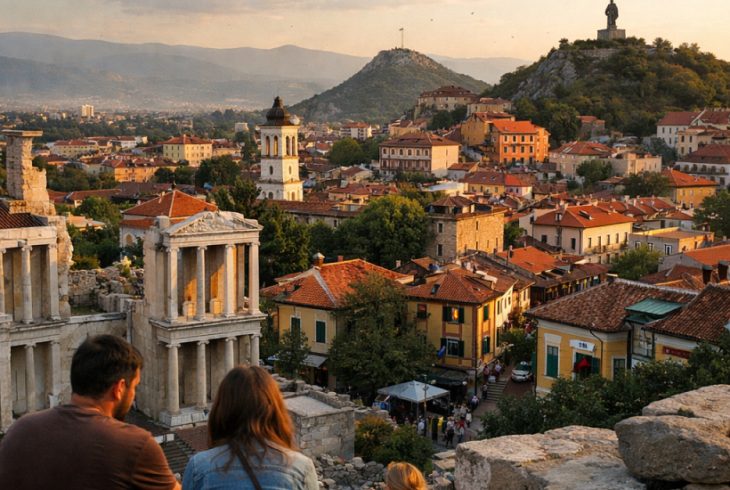

🎯Too Long; Didn’t Read
- Start early in Plovdiv’s Old Town. The streets are quiet, the house museums still empty – shots come easy without the crowds. Walk downhill to the Ancient Theatre, then follow the slope toward the center. Roman ruins sit baked into the city’s heartbeat, right there beside cafés and passing trams.
- Mid-day, reset indoors at the basilicas. Their mosaic floors offer a quick, concentrated dose of history. Afterward, shift gears. The center near Dzhumaya Mosque moves at a slower burn – grab food, wander the shopping streets, let the pace drop.
- Kapana is for the late afternoon. Coffee, art shops, bookstores; an evening stroll here requires zero effort. Then, make the climb up Nebet Tepe as the light starts to soften. The reward is a wide-angled view over rooftops and distant hills.
- Eat straightforward, unfussy Bulgarian: banitsa, kebapche, Shopska salad, ayran. For dinner, commit to a traditional mehanna or choose one of Kapana’s modern spots for something lighter. If drinking, local wine works. Rakia? Keep it small, sip slow – especially when the air is warm.
Plovdiv in 1 day: an easy route with no rushing
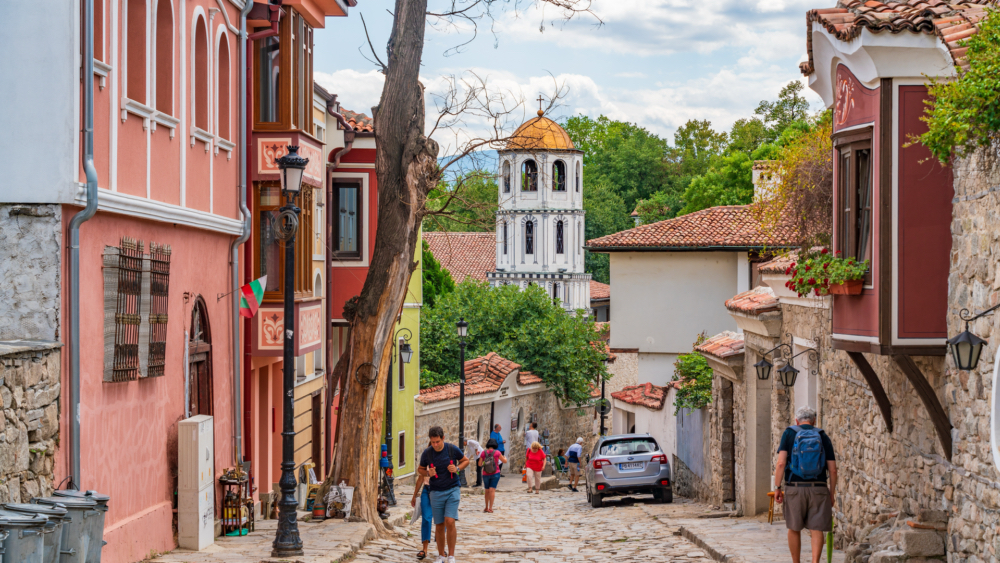
Old Town: house museums, cobblestone streets, and views
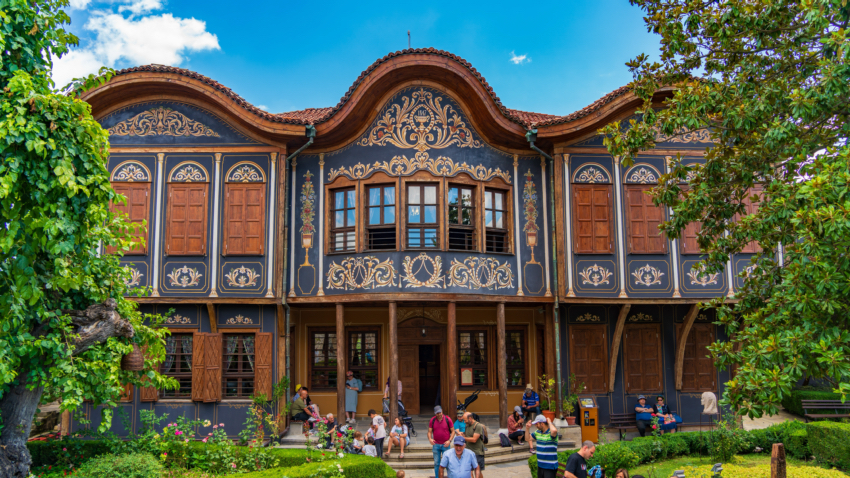
The easiest place to start is the Old Town. It’s compact, but packed. Mornings work best here: fewer people, more quiet, photos without the chaos. The route is simple: walk uphill through the older streets, then do a loop through the neighborhood with houses from Bulgaria’s National Revival period. Some are open as museums, with interiors, furniture, everyday life details, and city history that doesn’t feel like a lecture. The stone pavement can be uneven, so wear shoes that feel stable.
Along the way you’ll pass small churches, courtyards, stairs, balconies. Views pop up around almost every corner, especially over rooftops and the hills.
The Ancient Theatre and Roman history in the center
From the Old Town, it makes sense to head down to the Ancient Theatre. It’s well preserved and still used for events, but even without a concert it looks solid. The amphitheater is open, the paths are clear, and you can walk up higher to get the full view. Nearby you’ll notice layers from different eras: wall fragments, stone blocks, info plaques.
From there, the route pulls you toward the center, where Roman history is built right into the city. In Plovdiv, that’s normal. Ancient pieces aren’t hidden behind fences – they sit next to shops and cafés. The contrast doesn’t feel weird. It actually helps you navigate.
Kapana: coffee, bars, and an evening walk
After history and uphill streets, you’ll probably want a change of pace. Kapana is perfect for that. It’s a small area with short streets, signs everywhere, art shops, little studios. During the day it’s a good place to pause: coffee, a quick bite, some shade.
Later in the evening Kapana switches on. Music starts, bars open up, the streets get busier. It’s an easy place to wander since everything is close and you don’t need a plan. The route can be as simple as walking a few blocks, popping into a bookstore, grabbing a small souvenir from a local creator, then sitting outside at a table. The vibe is lively, but not exhausting.
Main sights you shouldn’t miss
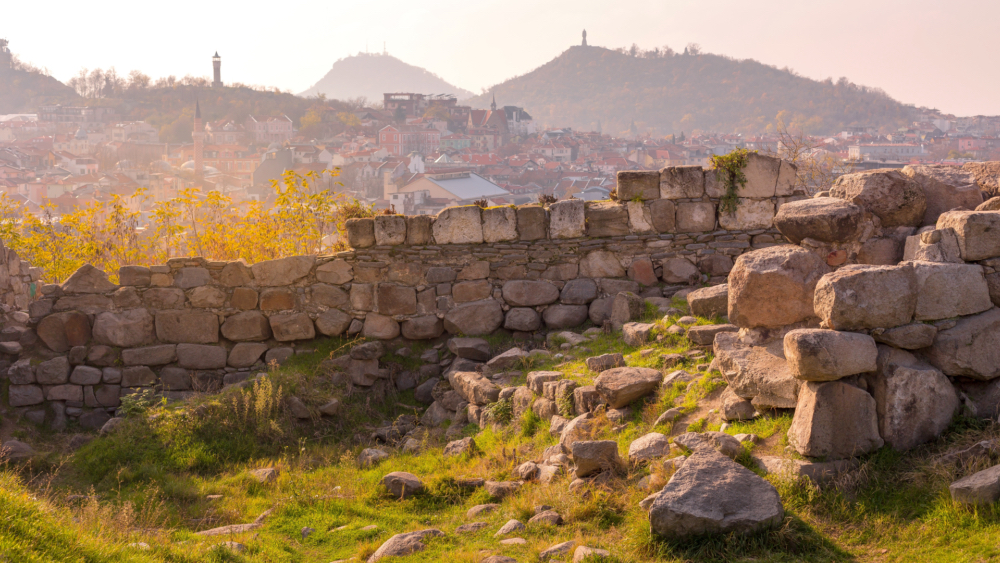
Nebet Tepe and Plovdiv’s hills
Plovdiv often gets called the city of hills, and Nebet Tepe is one of the most straightforward climbs. There are paths, the walk is short, and the panorama opens wide: rooftops, the center, neighborhoods stretching out. Go closer to evening, when the heat calms down and the light gets softer. You don’t need anything special – just water and some care on the stones.
Up top you’ll see remains of old fortifications, but the main thing is the view. Locals come too, so it doesn’t feel staged. Sunset often pulls in a small crowd with cameras and takeout coffee.
Dzhumaya Mosque and the center
In the center, your attention will land on the Dzhumaya Mosque fast. It’s a key stop because it sits right in the middle of the city’s movement: shopping streets, cafés, constant foot traffic. The architecture reads clearly even from the outside, and the atmosphere feels calm. Nearby you’ve got pedestrian zones, stores, street musicians.
Central Plovdiv is also great for practical breaks: food, water, a pharmacy, a supermarket. The history here isn’t separated from daily life. It’s simply there, side by side, and it feels natural.
The basilica and mosaics
Plovdiv’s strength is that archaeology here doesn’t feel dusty or disconnected. A strong example is the basilicas with Early Christian mosaics. The exhibits are set up so you can view the mosaics from above, which makes the patterns, scenes, and details easier to catch. This is a smart mid-day stop when you want to step inside and drop the street noise for a bit.
The visit takes a reasonable amount of time. It’s not an all-day thing, but it’s not a five-minute sprint either. The presentation feels modern, without drowning you in dates. When you step back outside, it’s easy to return to the center and keep going.
Where to eat well: Bulgarian food and local spots
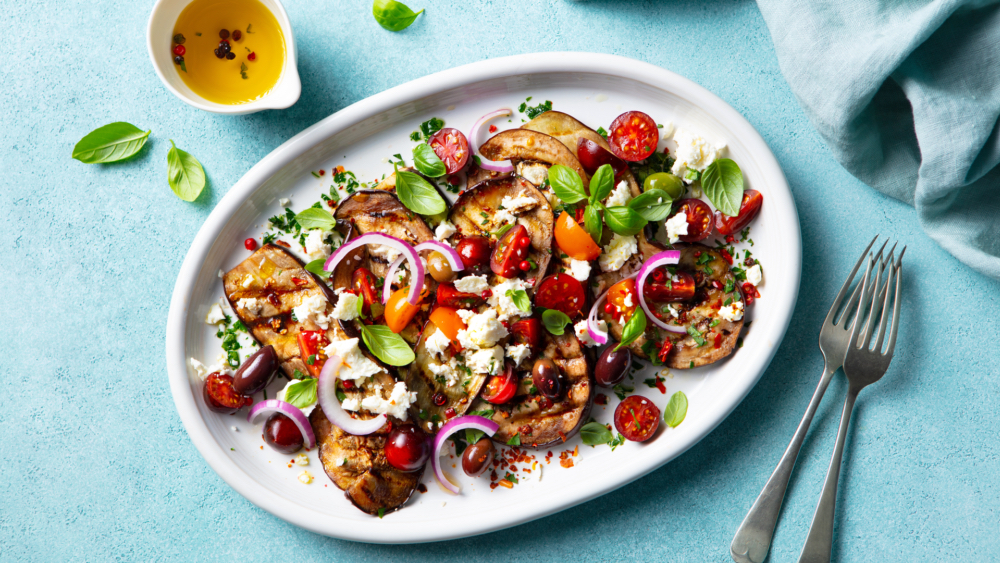
What to try: banitsa, kebapche, Shopska salad, and ayran
The easiest way to start with Bulgarian food is the classics. You’ll get the baseline taste fast. Banitsa is a cheese pastry, usually perfect for breakfast or a quick snack while walking. Kebapche is grilled meat, usually served with sides and sauces – filling, no drama. Shopska salad is veggies and cheese with a simple dressing. It sounds basic, but it works every time. Ayran helps a lot on warm days, especially if you’ve been climbing.
The simple approach is best: order a few staples and don’t try to cover the whole menu immediately. That way you get your own read on seasoning, salt, and portion sizes.
Traditional mehanas and modern spots in Kapana
In Plovdiv, you’ll usually run into two formats: traditional mehanas and more modern places, especially in Kapana. A mehanna typically serves heavier Bulgarian food, often with grilled meats, baked veggies, soups, and homemade bread. It’s a good fit for a group, or for when you’ve been walking all day and you want an actual dinner, not coffee and cake. Kapana has more places with creative dishes, vegetarian options, and unusual breakfasts.
A nice detail: a lot of spots lean on local ingredients and clear recipes, without trying too hard. The choice depends on timing. Daytime is easier with something light and fast. Evening is better for a calmer table, hot food, and a slow conversation.
Desserts and drinks
For desserts in Plovdiv, keep expectations normal – but you can still find good stuff. Homemade pies, yogurt-based desserts, small-café pastries. For a short trip, that’s plenty. With drinks, remember the local wine. Bulgaria has a real wine culture, and in Plovdiv it’s not hard to find wine bars offering glasses from the menu.
Rakia is its own category. Keep it relaxed: take a small pour, drink it slowly. In the heat, strong alcohol hits harder, so it’s worth being careful. A simple order works best: food first, drinks after, and no experiments on an empty stomach.
Culture, events, and things to do
Plovdiv’s museums
If you can spare two or three hours for culture, Plovdiv’s museums give you good options. The Ethnographic Museum shows everyday life and crafts from the region, and it’s usually easy to follow even if you’re not deep into the topic. For a visual reset, check out city galleries and exhibition spaces. You can catch local artists and modern projects.
Archaeology collections connect the city to its ancient past and explain why the Roman layer isn’t random here. A lot of it sits close together, especially near the Old Town and the center. Museums won’t break your walking rhythm. They add meaning without slowing you down too much.
Street art and galleries: what creative Plovdiv looks like
Plovdiv likes visual details, and you’ll see it best in Kapana and nearby blocks. Street art shows up on walls, doors, utility boxes – sometimes quick pieces, sometimes full works. It doesn’t feel like it’s fighting the city. Most of it looks cared for and part of the space.
At the same time, small galleries and workshops keep working: ceramics, illustrations, posters, jewelry. Often the artist is right there inside. You can buy something directly, without the fake “tourist shop” vibe. This kind of walk pairs well with coffee and short stops. The pace stays active: five minutes outside, ten minutes inside, then back on the street.
Festivals and concerts
Plovdiv’s event scene is noticeable, especially in the warmer season. There are music shows, film screenings, markets, cultural weekends in Kapana. Sometimes schedules link to the Ancient Theatre, since it works as a real venue, not just a monument. There are modern dance festivals and city celebrations that pull crowds into streets and courtyards.
One thing matters: schedules change, so it’s better to check what’s happening during your exact travel dates. If you do that, you can build the day around one evening event. It turns the trip into something more focused, not just “walking around.” It adds energy without needing complicated planning.
Tourist basics
Getting around
Getting to Plovdiv is usually easiest through Sofia. From there, buses and trains run regularly, and the ride takes a few hours. No complicated planning needed. Inside the city, walking works best, especially if you’re aiming for the Old Town, the center, Kapana, and the hills. Distances are real, but the climbs can add up, so shoes and water solve half the problems.
Public transport helps if your place is far from the center, or if the day is hot. Taxis work well for short rides, especially in the evening. To save time, use apps or ask a restaurant to call one. The city doesn’t feel confusing.
Where to stay
Consider rhythm. The Old Town delivers quiet mornings and history right outside your door. However, prepare for stairs and difficult car access – a particular hassle with luggage. Kapana, in contrast, pulses after dark: bars, restaurants, late walks without a taxi in sight. The center strikes a balance. It’s close to everything, offers simpler transport links, and stacks accommodation options across the budget spectrum.
On a tight one-day schedule, aim for the main pedestrian zone. You minimize transit time. The route unfolds naturally: step outside and simply start walking.
Useful tips
Plovdiv generally feels calm, but basic habits still matter: watch your stuff in crowded places, don’t leave your phone near the edge of a table, keep documents in a secure pocket. It’s easy to control your budget if you decide upfront how much goes to food and museums, and how much goes to shopping. For souvenirs, skip the big generic stores and look in Kapana instead. You’ll find more locally made items and less random clutter.
Timing is simple: Old Town and the theatre take the first half of the day, the center and mosaics fit mid-day, and Kapana plus a hill works best toward evening. Keeping an extra hour as a buffer is always smart. Plovdiv rewards pauses.
❓FAQ❓
What’s the best time of year to visit Plovdiv for a day trip?
Hit it in late spring or early fall. You’ll get kinder weather, more daylight, and – crucially – you’ll dodge the worst of the tourist herds.
Do I need cash, or is card payment enough?
Cards are fine for most sit-down spots. But don’t get caught short: stash some cash for the little family-run shops, street-food stalls, and impulse buys. It just makes things smoother.
How early should I start the day to fit everything in?
Aim for 9 or 10 in the morning. That window lets you cover the key sights at a decent pace, with room for a proper coffee break or two. No need to sprint.
Leave a Reply