
🎯Too Long; Didn’t Read
- Before You Go: Check conditions thoroughly. Consult the forecast, tide charts, and surf reports. Note any UV index or local advisories. If warnings are posted, be ready to switch locations or plans entirely.
- Choose Wisely: Opt for a lifeguarded beach. Read all posted signs and understand the flag system. Know exactly when the lifeguards go off duty.
- Pack for Problems: Water is essential – bring plenty. Include basic first aid, sting treatment, shade, phone protection, and necessary medications.
- Rip Currents: If caught, don’t fight directly toward shore. Instead, float to conserve energy. Signal for help. Swim parallel to the beach until free, then angle your return.
- Swim Smart: Use the buddy system. Remain inside marked swimming zones. No alcohol before swimming.
- Avoid Impacts: Steer clear of surf zones, boards, piers, and boat lanes. Most injuries result from collisions.
- Sun and Heat: Apply broad-spectrum sunscreen early; reapply often. Use clothing and shade for cover. Clouds do not block all UV rays.
- Watch for headache, nausea, or confusion – signs of heat trouble. Cool down immediately. Seek help for severe symptoms.
- Hydrate steadily. Add electrolytes during activity or high heat. Don’t wait for thirst.
- Protect Your Body: Guard feet from hot sand and sharp rocks. Clean and cover any cuts. For deep punctures, don’t dig – get professional care.
- Marine Stings: Follow specific local guidance if posted. Avoid rubbing the affected area. Seek help if pain spreads or symptoms worsen.
- Weather Turns: Exit the water immediately at thunder. Retreat to a solid building or enclosed vehicle. Wind can turn loose gear dangerous.
- With Children: Assign one dedicated water watcher. Use bright-colored swimwear. Set firm boundaries. Use a proper life jacket – not toys.
- Establish a lost-person plan: a fixed meeting point, a current photo, and a contact number secured on a wristband.
- Emergencies: Alert lifeguards first. Call emergency services early. Do not risk becoming another victim. Begin CPR only if trained.
Before You Hit the Sand: Plan for Safety
Check the Forecast, Tides, and Local Advisories
Look beyond the temperature. Scan for gusts, storm buildup, surf height, and UV index. Posted warnings are non-negotiable – contaminated water, riptide alerts, crushing waves. Tide flux is everything. An easy walk-in can turn treacherous; some spots get cut off entirely when the water rises.
For new beaches, suss out local authority pages or shoreline boards. Check for closures, flag systems, time limits. If things feel off, postpone or relocate. Don’t just gloss the details. Skim them, miss something vital.
Pick a Lifeguarded Beach and Know the Rules
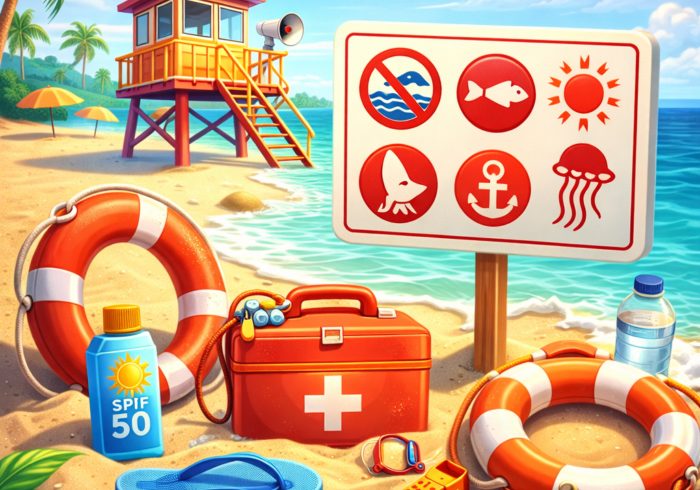
Choose beaches with active lifeguards. It’s a non-negotiable starting point. Lifeguards do more than pull people from the water; they track everything – the pull of a rip current, a changing swell, a tide on the turn. They define the safe zones. When you arrive, read the signs. Warnings cover rip currents, surf hazards, jellyfish, restricted sections.
Rules exist for a reason: no-swim areas, board zones, mandatory leashes, banned inflatables. Follow them. Crowd wisdom is often crowd ignorance. Unsure where to swim? Ask a lifeguard directly. They field that question constantly. Always note the posted hours. A lifeguarded beach after hours is just a beach. They clock out, protection drops.
Pack a Smart Safety Kit (Not Just Sunscreen)
Packing for the beach? Plan for problems, not just good vibes. Skip the guesswork. Essentials cover cuts, stings, dehydration, and that long trek back to the car.
Water is non-negotiable – bring a backup bottle too. For first-aid, think basics: bandages, wipes, gauze, tape. Include sting relief and tweezers. Sun protection means a hat, sunglasses, and actual shade from an umbrella or tent. Keep your phone in a sealed pouch; add a power bank. Never forget personal medications.
Traveling with kids? Throw in a loud whistle. It’s cheap. It works.
Water Safety Essentials
Understand Rip Currents and How to Escape Them
That deceptively calm patch between breaking waves? That’s the rip current. It’s a narrow, fast-moving channel pulling straight out to sea. Feel that sudden tug in your legs? Don’t panic. Fighting it, charging headlong toward the beach, drains your strength in minutes.
Stay loose. Float. Tread water. Get a breath. Signal clearly – one arm held high. Then swim parallel to the shore. Not just a few strokes; keep going until the pull slackens. You’ll feel it. Then turn, angle back to land.
If escape seems impossible, conserve energy. Keep floating. Shout. Wave. Going silent makes you invisible. A buddy or lifeguard scans for movement, for an arm above the water. That signal changes everything.
Swim Smarter: Flags, Boundaries, and Buddy System
Read beach flags. They’re not decor; they’re the ocean’s direct communication. Swim between the markers if they’re posted. Don’t wander outside them thinking you’re fine – conditions shift, distance compounds. Always buddy up, even if you’re strong. Establish quick check-ins: every few minutes, look up, confirm everyone’s accounted for.
In groups, assign one person to watch the water relentlessly while others rest. Skip alcohol before swimming; it dulls balance, judgement, and your sense of cold. Inflatables aren’t safety gear. They flip. They get pinned offshore.
Waves, Boards, and Boats: Avoid Impact and Collisions
Most beach injuries? Not drowning. Impacts. Pounding surf can drive you into a sandbar, slam you onto rocks. With heavy waves, stay shallow or skip it entirely. Give surfers and bodyboarders wide berth; respect those board-only zones.
If you’re on a board yourself, wear a leash. Learn to fall away from it. Watch for boats and jet skis – note rental lanes. They’re there for a reason. Swimming near a pier or harbor entrance? Don’t. Currents and vessel traffic make it a bad bet.
Sun, Heat, and Hydration
Sun Protection That Actually Works
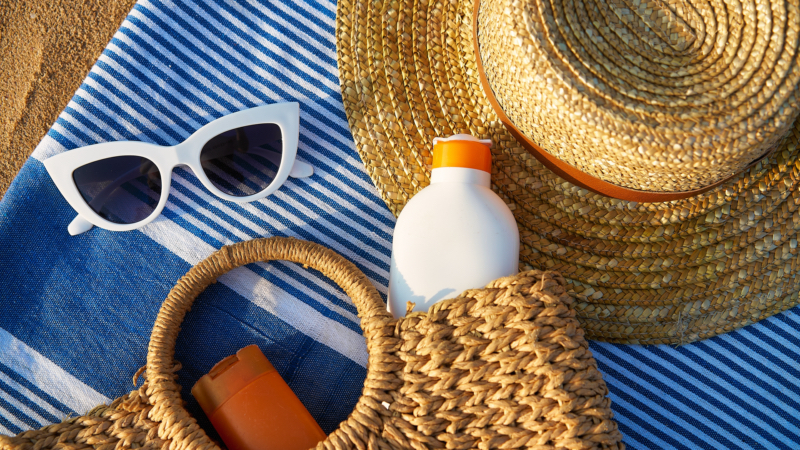
Sunburn happens often. Each burn increases your lifetime risk of skin damage. Choose a broad-spectrum sunscreen with high SPF. Apply it *before* you step outside. Reapply after swimming or sweating.
Coverage is key. People miss the ears, the tops of the feet, the back of the neck, and the hairline. Don’t be one of them.
Clothing provides serious protection – often underestimated. Rash guards, wide-brimmed hats, and fabrics with UPF ratings mean less dependence on sunscreen alone. Take shade breaks, particularly between 10 a.m. and 4 p.m.
Speaking of coverage: spray sunscreens need to be rubbed in. A quick, uneven mist leaves gaps.
Fair warning: clouds don’t block UV rays. If your skin already feels hot or tight, you’re behind on protection.
Prevent Heat Exhaustion and Heatstroke
Heat issues tend to hit at the beach, that exact moment when everyone’s sun-dazed and relaxed. Spot the early stuff: a headache that builds, nausea, dizziness, cramps, or just feeling wiped. Key detail – if heavy sweat suddenly dries up, pay attention. If someone seems off, move them. Now. Get to shade, loosen anything tight, cool the skin with water (not ice-cold), and offer small sips of fluid. Pushing through? Bad idea.
Heatstroke is different – a straight-up emergency. Watch for confusion, passing out, seizures, or skin that’s hot and dry. That’s your cue: call for help immediately.
Prevention comes down to planning. Cycle between sun and shade regularly. Kids and older adults lose their cool faster. Same for anyone who skipped breakfast or had a few drinks – their risk spikes.
Hydration and Electrolytes for Beach Days
Pack more water than seems necessary. Wind and sun parch you fast; swimming masks sweat loss. Drink consistently, not just when thirst hits. Heavy activity – volleyball, long walks, constant swimming – means adding electrolytes in the heat. Use rehydration packets, sports drinks, or salty snacks alongside water.
Balance is key. Gulping only plain water all day can backfire in extreme conditions. Alternate your intake. Check urine color: dark usually means you’re lagging.
Beach Hazards on Land
Sand, Rocks, and Cuts: Foot Protection and First Aid
Barefoot feels nice until it doesn’t. That sizzle of hot sand is one problem; a hidden shell or piece of glass can slice just as fast. In rocky spots, grab some water shoes or sturdy-soled sandals.
If you get cut, rinse it with clean water. Use tweezers for any visible debris, apply antiseptic, and cover it up. Watch that wound later – ocean water isn’t clean. For blisters, don’t rip the skin. Just pad it and keep things clean.
Someone steps on something deep? Don’t start probing blindly. Control the bleeding, keep the area stable, and find medical help. Fast.
Wildlife and Stings: Jellyfish, Sea Urchins, and More
Keep your distance from wildlife. Jellyfish, urchins, stingrays – even small crabs – can wreck your day. If jellyfish are spotted, stay out or suit up in protective gear. For stings, rinse with seawater. Freshwater worsens the reaction. Remove any tentacles carefully; rubbing is a bad move. Applying heat, like warm water, often eases pain.
But protocols differ by species, so heed any posted guidance. Sea urchin spines can snap off and lodge in skin. Don’t dig them out. If pain escalates or symptoms spread, seek professional help immediately.
Weather Threats: Lightning, Strong Winds, and Sudden Surf
Beach conditions shift fast. Hear thunder? Lightning’s already within range. Get out of the water immediately and seek shelter in a solid building or a closed vehicle – forget open structures or lone trees. Wind can whip umbrellas and tents into dangerous projectiles, or push you into unexpectedly rough surf. Secure your gear or stow it.
Pay attention to the surf. Wave sets can surge without notice, particularly around reefs or following a tide change. If the ocean starts dragging you out or waves build rapidly, there’s no time to think. Get clear. Then you can pause and reconsider.
Kids, Groups, and Emergency Readiness

Child Safety: Supervision, Floaties, and Clear Boundaries
Supervision around water isn’t casual. “Watching” means your eyes are glued to the kid – phones are away. Try the water watcher system: one adult has that single job, no distractions, then tags another person in. Establish hard rules upfront: the exact areas they can enter, depth limits, and that “stop” means freeze immediately. For little ones, dress them in electric lime or neon orange – colors you can pick out in a flash.
Floaties might build some confidence, sure, but they’re unreliable; they can deflate or slide right off. For a weak swimmer, skip the pool toys. Get a Coast Guard-approved life jacket and ensure the fit is snug. That’s the real gear.
Lost Person Plan: Meeting Spots and ID Tips
Crowded beaches swallow people. Decide on a fixed meeting spot first – something unmistakable, like lifeguard tower five, the main entrance arch, or that giant ice cream sign. “By the water” is useless; tides shift. Snap a quick photo of the kids in their morning clothes so you remember exactly what they’re wearing.
For little ones, put your number on a wristband or write it on the inside tag of their rash guard with a safe marker. Drill this: if lost, they find a lifeguard or someone with a staff badge. Never a random adult.
What to Do in an Emergency (and When to Call for Help)
Act early when things go wrong. Small problems snowball when people hesitate. See someone struggling in the water? Get a lifeguard immediately – don’t turn yourself into another rescue case. No lifeguard in sight? Call emergency services and pinpoint the exact location.
Priority one: remove the person from danger, but only if you can do it safely. Then check: are they breathing? Are they responsive? If trained and necessary, begin CPR. Manage shock: keep them warm, flat on their back, and watch them closely.
Some situations skip the “wait and see” approach entirely. Severe allergic reactions, breathing trouble, chest pain, confusion, or potential neck and back injuries mean calling for professional medical help right now. Don’t delay.
❓FAQ❓
Do beach safety tips change for cold-water beaches?
Cold water poses a distinct threat: it can trigger the body’s cold shock response, causing rapid breathing and reduced coordination. Counter this by slipping into a wetsuit and entering the water slowly to maintain breath control.
Are beach safety tips different at high altitude lakes vs ocean beaches?
UV radiation intensifies with elevation, demanding stronger sun protection. Lake bottoms also present hidden risks, often dropping off without warning. Stick to known areas and avoid venturing into uncertain depths.
What beach safety tips reduce theft risk without ruining the day?
Carry only essentials. Secure valuables in a waterproof pouch kept on your person – never stash phones or wallets unattended under a towel. This approach minimizes risk without sacrificing the day.



Leave a Reply